Is the little guy making a big difference? Coincidences…


Are megabanks too big to manage?

By Jennifer Liberto @CNNMoney May 11, 2012: 2:44 PM E
jpmorgan 2.gi.top Is the little guy making a big difference? Coincidences...JPMorgan Chase’s blunder raises questions about whether the big banks are just too big.

WASHINGTON (CNNMoney) — JPMorgan Chase’s $2 billion hedging blunder is adding fuel to those who think the megabanks are just too big.

JPMorgan Chase (JPMFortune 500) is in no danger of failing, thanks to much larger capital cushions mandated by the Dodd-Frank Act. But its mistake could have outsized repercussions in the global financial system, due to the sheer size of megabanks and the inter-connectedness of the global financial system.On Friday, stocks of all the big banks – including Morgan Stanley (MSFortune 500), Citigroup (CFortune 500) and Goldman Sachs (GSFortune 500) — were lower, as the JPMorgan Chase news undermined investor confidence in other Wall Street firms. U.K. regulators are reportedly looking into trades that transpired at the bank’s London office.

“It does make you wonder — this is one of the best managed banks in the country. What’s going on at these other institutions?” said Sheila Bair, former chief of the Federal Deposit Insurance Corp., in an interview with CNN’s Your Money to air Saturday. “Are they just too big to manage, even with very good managers?”

Economist Simon Johnson said the JPMorgan Chase episode highlights why U.S. regulators need to shrink big banks. He said the banks are so big and their trades are so complicated that even the Federal Reserve had no idea when it completed recent stress tests that JPMorgan could be facing these kinds of losses.

“Such banks have become too large and complex for management to control what is going on,” Johnson wrote on his blog, Baseline Scenario. “The regulators also have no idea about what is going on. Attempts to oversee these banks in a sophisticated and nuanced way are not working.”

Shrinking the Wall Street banks is also a controversial goal of FDIC director Thomas Hoenig.

In a Senate Banking hearing on Wednesday, Hoenig said that while he’s not in favor of an “arbitrary size limit” on the big banks, he wants to go back to a system in which commercial banks’ banking activities are separated from Wall Street trades. He’d prohibit even market-making at banks, which is currently allowed by the Volcker Rule.

“Let’s take these high-risk activities and move them out in to the market,” Hoenig said.

Jaret Seiberg, a Washington policy analyst at Guggenheim Securities, said the JPMorgan blunder increases the possibility that some in Congress may try to separate commercial banking from trading operations. But he still thinks it’s unlikely Congress actually goes through with it.

On Friday, liberal lawmakers who have maintained the megabanks are too big issued statements saying the JP Morgan losses illustrate why the banks should be broken up entirely.

“The debacle at JPMorgan Chase reaffirms my view that the largest six banks in this country, including JPMorgan Chase, which have assets equivalent to two-thirds of our GDP, must be broken up,” said Sen. Bernie Sanders, a Vermont independent. bug Is the little guy making a big difference? Coincidences...


————————————————————————————————————————-
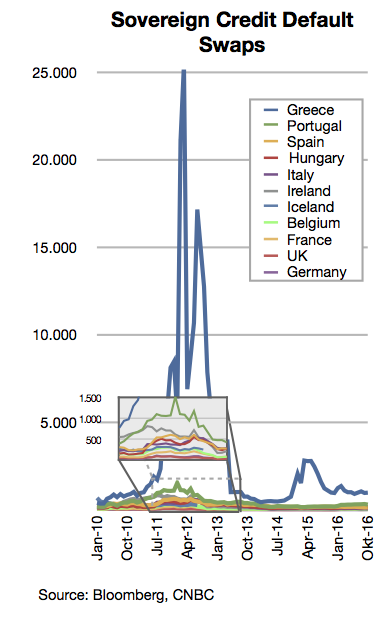
Sovereign credit default swaps Is the little guy making a big difference? Coincidences...


———————————————————————————————————

JANUARY 29, 2012, 7:56 PM INVESTMENT BANKING

U.S. Banks Tally Their Exposure to Europe’s Debt Maelstrom

BY PETER EAVIS
30subContagion1 tmagArticle v2 Is the little guy making a big difference? Coincidences...John Kolesidis/ReutersDemonstrators in Athens. Banks are disclosing more of their exposure to Greece, Italy, Ireland, Portugal and Spain.

After a hurricane, homeowners check nervously to see if their insurance will cover all of the damage. With the European financial crisis still threatening a trail of defaults, United States banks are betting that their insurance is going to pay out.

Five large American banks, including JPMorgan Chase and Goldman Sachs, have more than $80 billion of exposure to Italy, Spain, Portugal, Ireland and Greece, the most economically stressed nations in the euro currency zone, according to a New York Times analysis of the banks’ financial disclosures.

  • have made extensive use of a type of financial insurance, the credit-default swap, to help them offset any losses that might occur if defaults swamped the five troubled nations.

Using these swaps, along with other measures, the five banks have cut their theoretical exposure to the troubled countries by $30 billion, to $50 billion. The analysis also shows thatCitigroup has the greatest percentage of its exposure potentially protected, at 47 percent, while Bank of America has bought the least protection, at 12 percent.

30Contagion2 articleInline Is the little guy making a big difference? Coincidences...Justin Lane/European Pressphoto AgencyCitigroup, which runs Citibank, is confident it can collect on credit-default swaps.

On Sunday, the Greek government appeared close to a deal with the majority of its creditors that would lead to big write-downs in the value of its debt. But even a deal could spawn a series of events that could lead to payouts on Greek credit-default swaps. While the Greek swaps would probably be paid, they represent only part of the $602 billion of swaps that have been written on the five troubled countries.

Credit-default swaps have functioned well for big bankruptcies, but they were also a big source of systemic weakness in 2008, when the American International Group nearly collapsed because it could not make payments on its side of its swaps contracts. Some market participants now doubt they would work properly during periods of great financial instability.


“The likelihood of actually getting paid out from owning a credit-default swap would be troubling to me if this were my hedge against a systemic shock — especially in a political environment unfriendly to more Wall Street bailouts,” Mark Spitznagel, chief investment officer at the hedge fund Universa Investments, said through a spokesman.

Since the A.I.G. debacle, regulators have been working to ensure financial firms will actually be able to make, or collect, payments on their swaps when markets are failing. While regulators have the power to get a detailed look at banks’ swaps positions, investors have struggled to get a solid grasp of their exposures from the banks’ financial filings.

Analyzing banks’ Europe-related swaps can be like a walk through a fun house, where appearances are distorted and you do not know what is around the corner. The degree of disclosure among the five banks differs greatly, and not all of them give a complete snapshot of their exposures and offsetting bets.

But that could change in February, when the banks release 2011 annual reports. The Securities and Exchange Commission this month requested that banks now provide fuller and more consistent presentations of their European positions, saying disclosures have lacked transparency, and might therefore be inadequate for investors. Bank representatives last week said they would comply with the guidance.

One upshot of the new disclosure might be that certain banks’ European numbers could suddenly look substantially bigger, since the S.E.C. is effectively asking banks to unbundle key exposures in their financial statements so outsiders can see how big they are before offsetting items.

“If you do see a jump in gross exposures, there will be new questions for management,” said Mike Mayo, a bank analyst with the brokerage CLSA.

Citigroup said it had $20.2 billion of exposure to the five stressed peripheral countries at the end of last year. The bank said it had $9.6 billion of “credit protection” on those countries, and had set aside $4.2 billion of collateral that would also offset its total exposure.

Collecting on the swaps would mean Citigroup’s counterparties having the money in stressed times to make a full payment. John Gerspach, Citigroup’s chief financial officer, said this month that the bank was highly confident it could collect, adding that the entities it bought protection from were “very high quality.”

Citigroup’s disclosed gross exposure to the five countries, including $7.4 billion in loans that have not actually been drawn, was $28.9 billion at the end of last year. Its net number, after credit-default swaps and collateral, was $15.1 billion. Put another way, Citigroup has “hedged” 47 percent of its disclosed exposure to the five countries.

Bank of America appears to have hedged the least, with only 12 percent of its stated $14.4 billion exposure offset with credit-default protection, according to the analysis. “We carefully manage our risk while still supporting our clients in Greece, Italy, Ireland, Portugal and Spain,” said a Bank of America spokesman, Jerome F. Dubrowski.

Like other firms, Bank of America has cut its European exposure by aggressively selling assets and cutting back on lending since 2009, when the region’s debt began to look like a serious problem. The bank’s exposure to the five countries is down by 44 percent since 2009, Mr. Dubrowski said. Also important, the new S.E.C. disclosure request could reveal the extent to which a bank has bought credit protection from banks based in the stressed European countries.

The fear is that a bank, say, in Italy, would be unable to pay out on its swaps if the country’s government went into default. Morgan Stanley implicitly recognizes that in its European disclosures. Alone among the five banks, it broke out the amount of default protection it had bought from banks in the five peripheral countries, about $1.43 billion.

Credit-default swaps can be dangerous because they have the ability to hit one side of the trade with a demand for an overwhelmingly large payout if a default occurs. Right now, it costs a bank $401,000 a year to insure $10 million of Italian government debt for five years, according to Markit, a data provider. If Italy took a serious turn for the worse, and its government debt seemed in real danger of default, that swap price would rapidly spike higher, as happened with Greece.

If that occurred, the bank that sold the protection might then have to post a lot of cash to ensure it would make good on the swap. Large cash calls like that might drain some banks of liquid assets, causing systemic stress.

If an important part of the financial system overhaul were in place by now, there may be fewer questions about whether banks would be able to meet cash calls in stressed times. The change involves directing most swaps trades to clearinghouses, whose job is to ensure that the money flows underlying a trade are made. Clearinghouses would standardize collateral payments across the default swap market, and they might demand higher amounts of collateral than banks currently demand from each other.

Recognizing this weakness in the derivatives market, finance ministers and central bankers from the Group of 20 leading industrialized nations said in 2009 that they wanted to have clearing in place for all standardized derivatives by the end of 2012.

Yet, as of June, only 9.4 percent of the $29.6 trillion credit-default swap market is centrally cleared, according to the Bank for International Settlements. Notably, the credit-default swaps that pay out if a European government defaults appear to have been held back from central clearing by the British regulator, the Financial Services Authority, which declined to comment on why it had not yet approved these swaps.

As things stand, banks may still be able to avoid using their default swaps, except, perhaps, those on Greece. That is because the European Central Bank has taken stronger actions to prevent the crisis from worsening, like making $620 billion of cheap loans to European banks in December. But the central bank’s moves do little to actually reduce European government debt levels.

Until those come down, the banks are betting on their hedges, imperfect as they may be.

 

Φωνή λαού , οργή Θεού…

Greece election results mapped. Infographic
Greece’s election results are being mapped live by Greek data visualisation site igraphics (who also built this terrific guide to the recent bailout). This graphic updates as more results come in by the minute
Who made this graphic and where can I find it? igraphics.gr

Reggie Middleton on the Greek Bankruptcy

It’s Official & As I Foretold Years Ago, Greece Is Now In A True Depression As Reality Hits Greek Banks

Roughly two years ago, I penned a piece called How Greece Killed Its Own Banks! It outlined the end result of Greece attempting to hide sparse demand for its debt by forcing its banks to binge on it using excessive leverage. Of course, once you eat too much garbage, you start to stink, and eventually… Well, let’s look at it from a visual perspective:

Greece and the ECB kicked the can down the road for two years, but as fate would have it… Reality rears its ugly head, as exemplified in today’s MSM headline from CNBC: Record Losses at Greek Banks Show Pain of Bond Swap

Read more http://boombustblog.com/blog/item/6054-the-big-bang-reality-hits-greek-banks

The Bear Hug

Pundits are foretelling the end of the nation state and the advent of G0 , with a unitary world economic order defining relationships between countries.
This wishful thinking recalls to mind the fable of the animal congress, where the discussion centered on abolishing acts of aggression. The bear listened carefully to the deliberations and then came forth with the proposal that all teeth, tusks , claws, and nails be removed in order to ensure compliance. All that would remain offered the grizzly, would be a …powerful bear hug.
As always in these grandiose schemes elaborated by aspiring dynasts, Greece is the proverbial ‘canary in the coal mine’ alerting the unsuspecting by its insistence in asking uncomfortable questions and refusing to yield under pressure.
Many have misinterpreted the cacophony of commentary, heated discussions and plethora of opinions in the Agora as a sign of weakness and pending submission, when in actuality it presages eruption on a volcanic scale – a new Atlantis. Goliath never prevails.
LaconlykosGrizzly bear 300x240 The Bear Hug

Η Ελλάς δύει με τη Δύση: Η εξάρτηση της μοίρας της χώρας από ερωτήλους και φτηνές τροτέζες

http://www.dw.de/dw/article/0,,15916056,00.html

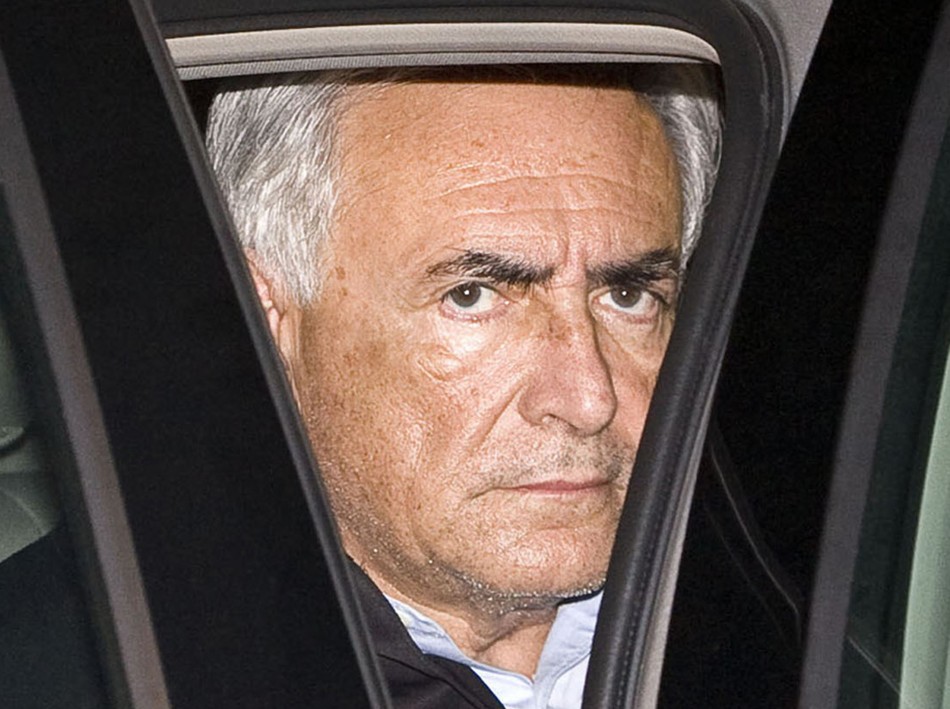
Dominique Strauss Kahn 300x223 Η Ελλάς δύει με τη Δύση: Η εξάρτηση της μοίρας της χώρας από ερωτήλους και φτηνές τροτέζες

Βόμβα μεγατόνων από Στρος Καν κατά Σαρκοζί
Πηγή: DW – Μαρία Καστρισιανάκη, Λονδίνο
Υπεύθ. Σύνταξης Ειρήνη Αναστασοπούλου
28/04/2012 | 16:32Τελευταία Ενημέρωση: 16:35 28/04/2012

προηγούμενο1 από 1επόμενο
________________________________________
________________________________________
Ο Στρος Καν βάζει βόμβα που θα μπορούσε να οριστικοποιήσει τον πολιτικό θάνατο του Νικολά Σαρκοζί Στην πρώτη, εδώ και ένα χρόνο, συνέντευξη του σε εφημερίδα, την βρετανική Guardian, ο Στρος Καν αποκαλύπτει ότι διαθέτει ικανές αποδείξεις για την εμπλοκή του Γάλλου Προέδρου σε σχέδιο πολιτικής του εξόντωσης. Τον Γάλλο πρόεδρο και το κόμμα του κατηγορεί ευθέως ο Ντομινίκ Στρος Καν για συνομωσία εναντίον του σχετικά με την υπόθεση της καμαριέρας του ξενοδοχείου Σοφιτέλ στην Ν. Υόρκη.

Στη συνέντευξη του στον δημοσιογράφο ΄Εντγουαρντ Τζέι Επστάιν, συγγραφέα του βιβλίου ” Τρεις ημέρες του Μαϊου” που κυκλοφορεί τη Δευτέρα στη Βρετανία, ο Ντομινίκ Στρος Καν αποκαλύπτει πως οι γαλλικές μυστικές υπηρεσίες είχαν παγιδεύσει τα επτά κινητά που είχε στη διάθεση του καθώς και τα προσωπικά του e-mail, κι αυτό του το αποκάλυψε φίλη του που δούλευε στο αρχηγείο του κόμματος του Σαρκοζί.

Παράλληλα, σύμφωνα με την αμερικανική εταιρία ιδιωτικών ερευνών Guidepost Solutions που ερευνά ακόμα την υπόθεση, ο επικεφαλής ασφαλείας του ξενοδοχειου Σοφιτέλ, γνώριζε εκ των προτέρων την αφιξη του Στρος Καν, παρόλο που ο ιδιος δεν είχε ειδοποιήσει κανένα.

Σχέδιο «comprehensive» για την Ελλάδα

Επίσης συγκεκριμένοι εργαζόμενοι στο ξενοδοχείο, που ας σημειωθεί ανήκει στην γαλλική Ακορν, ο ιδιοκτήτης της οποίας είναι φίλος του Σαρκοζί, επέδειξαν υποπτη συμπεριφορά και αρνήθηκαν να μιλήσουν στις αρχές. Από εξονυχιστούς ελέγχους όλων των ηλεκτρονικών μέσων παρακολούθησης, ο κ. Στρος Καν δηλώνει ευθέως πως η όλη υπόθεση ήταν στημένη, παρόλο που δεν αρνείται ότι υπήρξε σεξουαλική επαφή με την καμαριέρα, η οποία, οπως λέει, μπήκε στο δωμάτιο του ακριβώς γι αυτό το σκοπό.

Ο Ντομινικ Στρος Καν αναφέρεται συγκεκριμένα στην Ελλάδα και ευρύτερα την ευρωπαική κρίση. Αποκαλύπτει ότι την αποφράδα εκείνη ημέρα του Μαίου 2011, ήταν έτοιμος να μεταβεί στο Βερολίνο για να πείσει την Αγκελα Μέρκελ να συναινέσει σε σχέδιο με την ονομασια «Comprehensive» που αφορούσε σε δραστική λύση της Ελληνικής κρίσης χρέους. ” Δίχως να είμαι βέβαιος 100% πιστεύω πως θα την έπειθα και το ελληνικό πρόβλημα θα είχε λυθεί εν τη γενέσει του. Τώρα βλέπουμε την κρίση να καλπάζει.

Φοβούμαι πως δεν ξέρουμε τι μας επιφυλάσσει το μέλλον” καταλήγει ο Ντομινικ Στρος Καν. Οι σοβαρές καταγγελίες του πρώην επικεφαλής του ΔΝΤ, γίνονται σε μια πολύ κρίσιμη στιγμή που ο Σαρκοζί δίνει την ύστατη μάχη διάσωσής του.

Elections – No ; Plebiscite – yes

549035 3491341878941 1133325067 3363334 254249081 n Elections   No ; Plebiscite   yes

Λήθη και ομαλότητα ονειρεύονται οι πατριδοκάπηλοι της Ελληνικής Βουλής.

Την ώρα που αυτοκτονούν οι ψηφοφόροι και μένουν χωρίς φαγητό και θέρμανση εκατοντάδες οικογένειες μας ξανασυστήνονται οι τρυφηλοί Συβαρίτες της εικονικής ‘μεταπολίτευσης’ σαν φωστήρες σωσίες του Εθνους. Ζητούν να ξεχάσουμε το ‘πόθεν έσχες’ και να αγνοήσουμε τούς πραγματικούς λόγους που απεγνωσμένα ζητούν να κρατηθούν στο νόμισμα των αργυραμοιβών των Βρυξελλών και της Φραγκφούρτης. Ανάξιοι και αχαίρευτοι έχτισαν πύργους στην άμμο με δανεικά και τώρα τρέμουν την μήνι των πολιτών που σακάτεψαν. Μόνη τους ελπίδα η εξοικονόμηση χρόνου με αποπροσανατολιστικές ενέργειες που υπόσχονται εκλογές, συνασπισμούς και κάθε λογής ελιγμό. Σαν το ψάρι που σπαρταράει στο αγκίστρι όμως ας μάθουν πιά πως ‘όποιος σπέρνει δάκρυα, θερίζει ωκεανούς’.
Laconlykos

Letter to the President (of Greece) – recently received

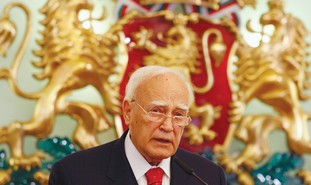
K Papoulias 300x178 Letter to the President (of Greece)   recently received Προς τον κ. Κ. Παπούλια:
Κύριε Παπούλια, είστε ο πρέπων πρόεδρος της Ελληνικής Δημοκρατίας;
Αν είχα τη δύναμη, θα προτιμούσα ως πρόεδρο της Ελληνικής Δημοκρατίας όχι εσάς, αλλά τον Ισλανδό πρόεδρο, τον Όλαφουρ Ράγκναρ Γκρίμσον. Μπορεί να καυχιόμαστε ότι εμείς γεννήσαμε τη δημοκρατία, αλλά πάει καιρός πια που δεν έχουμε συγγένεια μαζί της. Όταν το Ισλανδικό Κοινοβούλιο ενέκρινε κάποιο νόμο, παρόμοιο με το Μνημόνιο 1 και στάλθηκε για επικύρωση στον πρόεδρο της δημοκρατίας, αυτός ενεργοποίησε το μόνο… δικαίωμα που είχε, όπως έχετε κι εσείς: Δεν το υπέγραψε και κάλεσε το λαό σε δημοψήφισμα! Ήταν η πρώτη φορά που έγινε δημοψήφισμα στη χώρα αυτή. Η εξήγηση από μέρους του ήταν σαφής: «Δε μπορώ εγώ, επειδή κάποιοι λίγοι βουλευτές που ψήφισαν αυτό το νόμο, να υποχρεωθώ και να αναλάβω την βαριά ευθύνη, να επικυρώσω ένα νόμο που θα επηρεάσει τη ζωή κάθε πολίτη της χώρας μου, σε ένα τόσο σοβαρό θέμα, που μόνο ο λαός μπορεί να αποφασίσει…».
Το δημοψήφισμα έγινε και ο λαός απέρριψε το νόμο! Και δεν είχε άδικο: τρεις τράπεζες είχαν δανειστεί 80 δις ευρώ, ήτοι το δεκαπλάσιο από το Ακαθάριστο Εθνικό Εισόδημα της χώρας, είχαν χρεοκοπήσει και τώρα ζητούσαν από το λαό να πληρώσει τους δανειστές σε διάφορες χώρες (κάτι θυμίζει αυτό…).
Οι πολιτικοί άρχισαν νέες συνομιλίες με τους δανειστές και έφεραν ένα νέο τροποποιημένο σχέδιο στη Βουλή, κάτι σαν το Μνημόνιο 2, το οποίο ψηφίστηκε κατά πλειοψηφία και στάλθηκε στον πρόεδρο της Δημοκρατίας για επικύρωση. Και πάλι εκείνος είπε όχι και ζήτησε νέο δημοψήφισμα. Το επιχείρημά του ήταν σαφέστατο: «Στα μεγάλα θέματα δεν αποφασίζουν προσωρινοί ηγέτες, ηγέτης είναι ο λαός και αυτός θα αποφασίσει…»!
Χρειάστηκε να κατεβεί στους δρόμους, για να υπερασπιστεί τη θέση του ενάντια στη λυσσαλέα επίθεση των πολιτικών. Υπάρχουν βίντεο που δείχνουν τη σύζυγό του να αγκαλιάζει διαδηλωτές, που η αστυνομία τους έχει πνίξει στα καπνογόνα. Ήταν ανένδοτος στις αρχές του: «Υπάρχουν χώρες πιο ισχυρές οικονομικά από μας, εμείς όμως δεν πρόκειται να βάλουμε το κέρδος πάνω από τη Δημοκρατία μας», είπε.
Στο νέο δημοψήφισμα ο λαός απέρριψε και το Μνημόνιο 2. Ο πρόεδρος το πήγε ακόμα πιο πέρα και ζήτησε αναθεώρηση του συντάγματος, μόνο που αυτή τη φορά, η αναθεώρηση δε θα γινόταν από πολιτικούς αλλά από τον ίδιο το λαό!
Το επιχείρημά του ήταν και πάλι ατράνταχτο: «Ο λαός είναι η υπέρτατη εξουσία, αυτός πρέπει να συντάξει το σύνταγμα…»!
Έγιναν χιλιάδες συναντήσεις, στάλθηκαν άπειρα ηλεκτρονικά μηνύματα και η λαϊκή επιτροπή κατέληξε σε μια μορφή του συντάγματος, που φυσικά δεν είχε ούτε παραγραφές, ούτε ασυλίες και ούτε φοροαπαλλαγές για τους πολιτικούς.
Δεν έχει γίνει ακόμα δημοψήφισμα για το σύνταγμα, καθώς οι πολιτικοί παλεύουν με κάθε μέσο να το καθυστερήσουν, αλλά δε θα το πετύχουν για πολύ…
Σε κάποια στιγμή χρειάστηκε να καλέσουν το ΔΝΤ για βοήθεια, αλλά υπό ένα όρο: «Θα σας πληρώσουμε ό,τι δανειστούμε, αλλά δεν θα πειραχθούν οι μισθοί, οι συντάξεις και τα κοινωνικά προγράμματα, γιατί είμαστε μια σκανδιναβική σοσιαλιστική κοινωνία και σκοπός μας είναι η ευημερία του πολίτη και όχι τα κέρδη των τραπεζών»!!!
Ούτε κεραμίδα να έπεφτε στα κεφάλια των αρμόδιων του ΔΝΤ, αλλά τελικά το δέχτηκαν για πρώτη φορά στην ιστορία του ταμείου, γιατί κατάλαβαν ότι δεν έχουν να κάνουν με άτομα όπως της… (δε χρειάζεται να αναφέρω ονόματα).
Αλλά ο πρόεδρος της δημοκρατίας δε σταμάτησε εκεί: ζήτησε να γίνει έλεγχος στα οικονομικά όλων των πολιτικών και πολλοί από αυτούς αντιμετωπίζουν τον πέλεκυ της δικαιοσύνης συμπεριλαμβανομένου και του ίδιου του πρωθυπουργού.
Η έκθεση της αδέσμευτης επιτροπής έφτασε τις 2,500 σελίδες και χρειάστηκαν 45 συνεχείς ώρες για να διαβαστεί από καλλιτέχνες, συγγραφείς, απλούς πολίτες σε κεντρικό σημείο της πρωτεύουσας.
Και το συμπέρασμα ήταν σαφές: δεν ευθύνεται ο λαός για όσα έκαναν οι πολιτικοί, οι οποίο εκλέχτηκαν κάνοντας τα αντίθετα από όσα υποσχέθηκαν.
Τρία χρόνια μετά η Ισλανδία αρχίζει να βγαίνει από την κρίση, στην Ελλάδα μας λένε ότι θα χρειαστούν δεκαετίες και τότε θα δούμε αν….
Και κάτι ακόμα: ο Πρόεδρος της Δημοκρατίας της Ισλανδίας δεν το έκανε αυτό για να κρατηθεί στην καρέκλα.
Πριν λίγες μέρες δήλωσε ότι δε θα είναι υποψήφιος για επόμενη θητεία.
«Εκπλήρωσα το χρέος μου στο λαό μου…» ήταν η λακωνική δήλωσή του (όχι, δεν είπε αν ήταν κάποτε και στην Εθνική Αντίσταση της χώρας του…)!
Μήπως κ. Παπούλια θά ‘πρεπε να επισκεφθείτε τους Βίκινγκς της Ισλανδίας για να πάρετε κάποια μαθήματα δημοκρατίας και προεδρικής δεοντολογίας;
Μήπως αυτοί που έτρωγαν βελανίδια, όταν εμείς χτίζαμε Παρθενώνες, τώρα ξέρουν καλύτερα τι σημαίνει δημοκρατία, ενώ εσείς την ευτελίζετε – ουσιαστικά μια πράξη αιμομιξίας – στη χώρα που γεννήθηκε;
Και μια ακόμα δήλωσή του Όλαφουρ Ράγκναρ Γκρίμσον:
«Έχω την σταθερή εντύπωση, ότι τα κόμματα στη Βουλή δεν εκφράζουν αυτή την εποχή αντίστοιχη αναλογία για το λαό».
Εσείς θα κάνατε ποτέ αυτή τη δήλωση, που είναι πασιφανής σε κάθε Έλληνα πολίτη;
Θα ήθελα να σας δω δίπλα στον Όλαφουρ Ράγκναρ Γκρίμσον… Έτσι για να καταλάβω τη διαφορά του τί σημαίνει γίγαντας και τι νάνος, Πρόεδρος της Δημοκρατίας…
Και αναλογιζόμενος τη ρήση, «τα στερνά τιμούν τα πρώτα», τί νομίζετε ότι θα γράψει η Ιστορία για εσάς;
Ο απλός Έλληνας πολίτης